
Integrating health and social care could save the Government up to £4.5 billion a year.
That’s a staggering figure.
But perhaps the most important question is not how much money could be saved. It’s why we continue to accept a system that leaves so much money tied up in preventable problems in the first place.
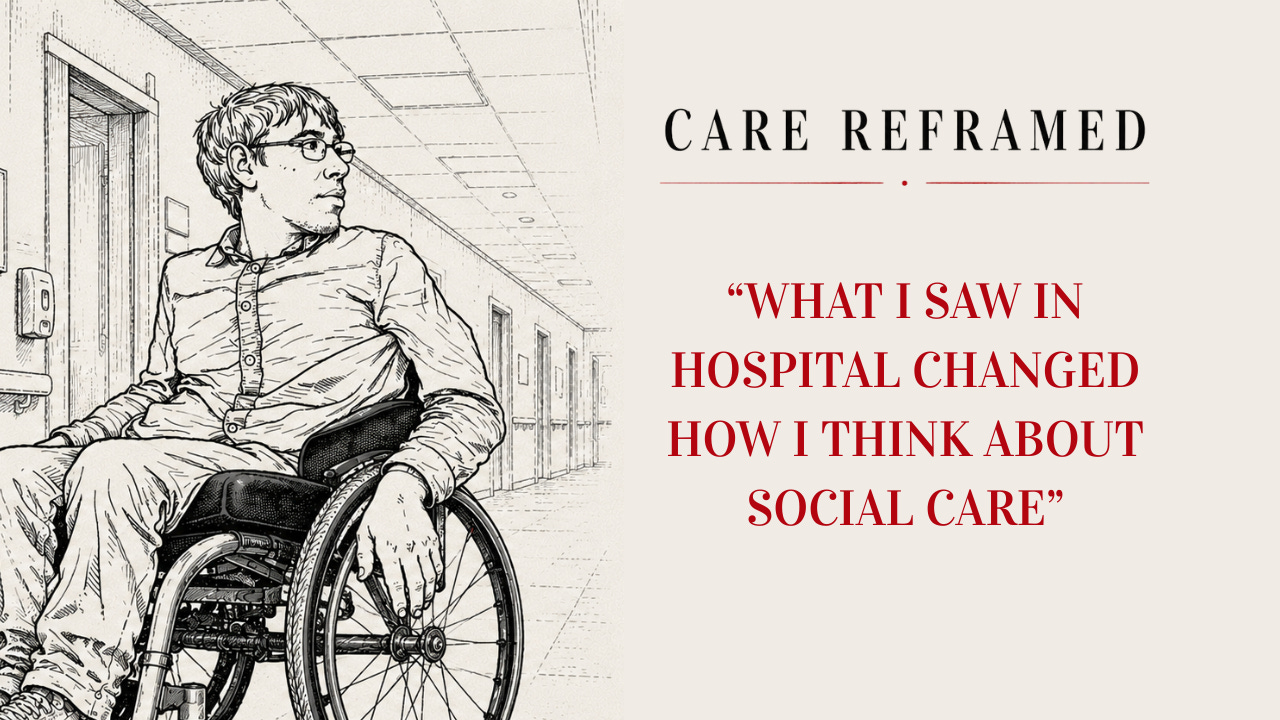
During my own time in hospital, I saw patients who were medically fit to leave. Their treatment was complete. Their hospital bed was no longer the right place for them.
Yet they remained on the ward.
Not because they needed more healthcare, but because the support they needed outside the hospital wasn’t in place.
Days turned into weeks. Weeks turned into months. And for some patients, a temporary delay became a year of waiting.
Hospital beds remained occupied. New patients waited for admission. Staff worked under increasing pressure. And for the patients themselves, prolonged stays often led to reduced mobility, loss of independence, and declining wellbeing.
This is what happens when health and social care operate as separate systems despite serving the same people.
A hospital can declare someone medically fit for discharge, but if there is no care package, no community support, no joined-up planning, the patient stays exactly where they are.
The result is a system that costs more, delivers less, and frustrates everyone involved.
A prosperous, fair and well-integrated health and social care system is something everyone would wish for.
But over the better part of the late 20th and early 21st century, decisions about health and social care have too often been made in boardrooms and Whitehall offices, far removed from the reality of wards, care homes, and people’s living rooms. And the systems those decisions created are the ones that continue to shape and sometimes strain the care we deliver today.
Perhaps it is time for a grown-up conversation.
Not about whether health and social care should work together, but about why we continue to treat them as separate systems when the evidence, the economics, and most importantly people’s lives, suggest they should be one.